
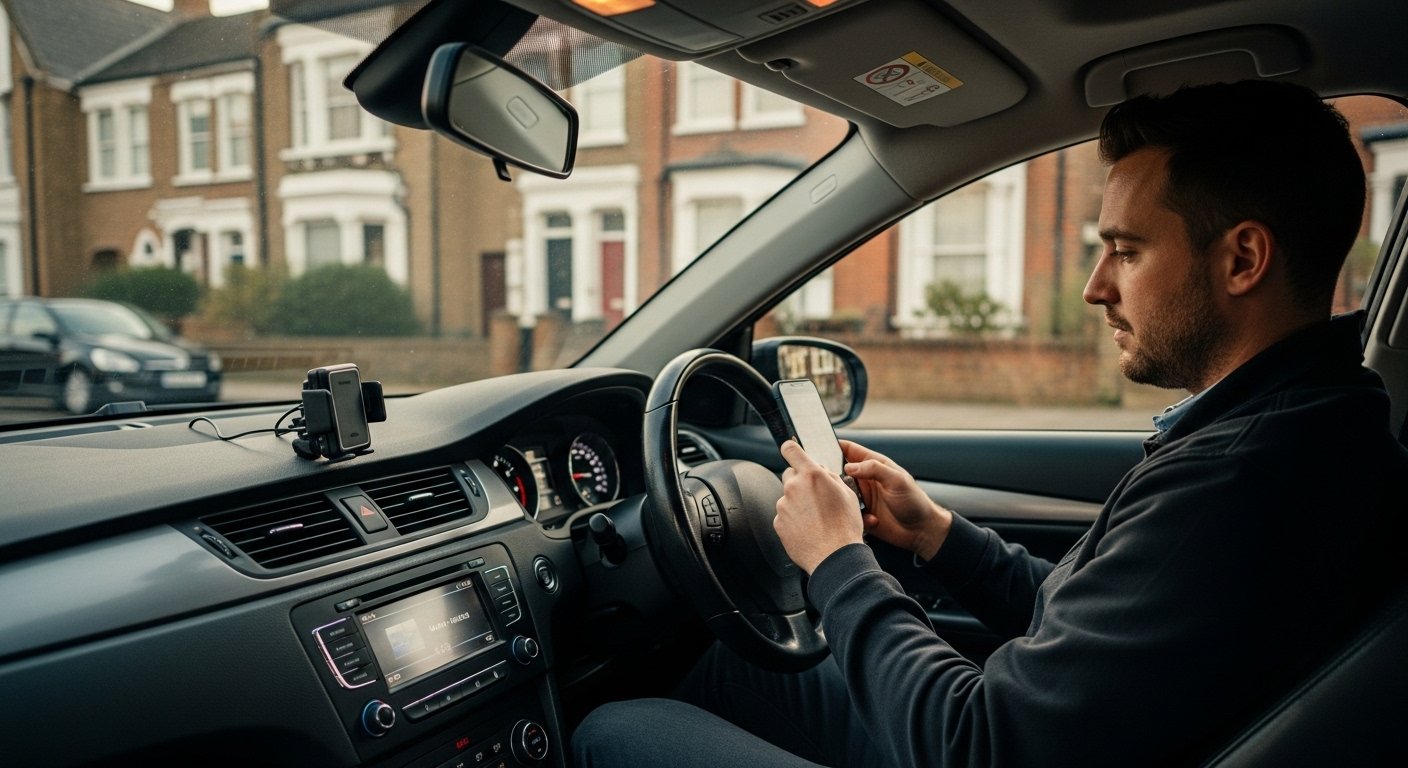
Mileage Tracking
Professional mileage tracking systems for UK Uber drivers, designed to capture every legitimate business mile and maximise the 45p per mile HMRC allowance across all route types.
Why drivers trust us
Uber Driver Tax Specialists
We specialise in ride-hailing tax returns and understand the complexities of private hire income across the UK, from surge pricing to multi-app earnings.
HMRC Compliance Built In
We keep multi-app drivers fully HMRC compliant anywhere in the UK, from digital platform reporting reconciliation to Making Tax Digital.
Fixed Written Quotes
Every engagement starts with a fixed written quote within 48 hours of your enquiry. The price we quote is the price you pay, with no obligation to proceed.
Maximise Your Deductions
We find every legitimate expense deduction available to self-employed private hire drivers, from mileage and phone costs to congestion and clean air zone charges.
Mileage Tracking: What You Need to Know
Accurate mileage tracking forms the foundation of tax efficiency for Uber drivers, where proper documentation of business versus personal miles directly impacts allowable deductions. The 45p per mile allowance for the first 10,000 business miles provides substantial tax relief but requires meticulous record-keeping to satisfy HMRC.
Many drivers accumulate high annual mileage, triggering the reduced 25p rate after 10,000 miles. Proper tracking systems help identify the optimal transition point while ensuring every legitimate business mile is captured and categorised correctly.
HMRC requires detailed logs showing dates, destinations, mileage, and business purposes for each journey. Generic tracking often fails to distinguish between business and personal miles, which can result in denied deductions during enquiries.
How Mileage Tracking Actually Works
HMRC's published guidance on mileage records requires for each business journey: date, start point, destination, business purpose, and miles. The standard for 'business purpose' on Uber driving is straightforward - 'collecting passenger from X to Y' is sufficient where individual ride records exist on the Uber app's trip history. The complication is the deadhead miles between passenger drop-off and the next passenger pickup or repositioning to a busier zone. These count as business miles under HMRC's interpretation because they're necessarily incurred to maintain the trade, but they don't appear on Uber's app log directly - they have to be reconstructed from GPS data or a tracking app's continuous logging. Drivers who only count fare-bearing miles (as Uber's app shows) materially under-claim. Tracking apps that capture all driving time and let the driver flag business segments cover the gap.
Vehicle ownership structure affects which mileage method works best. Owned vehicles with high purchase prices benefit from the actual costs method including capital allowances - the £20-30k purchase of an EV or hybrid claimed as 100% first-year allowance under the EV provisions can wipe out a year of taxable income. Leased vehicles can claim actual lease costs plus running costs, where the lease premium typically beats the simplified rate for higher-value cars. Older or lower-value owned vehicles usually beat the alternatives with simplified 45p/25p mileage. The accountant runs the comparison annually so the method matches the vehicle's economics each year - and once chosen for a vehicle, the method has to be retained until the vehicle is changed.
Personal-use carving is where most drivers either over-claim (counting commute and family trips as business) or under-claim (worrying about claiming legitimate business journeys). The principle is simple: any journey that has a business purpose is business mileage even if it has incidental personal benefit. Driving home from a dropped-off passenger is business. Driving to the dealership to collect tyres is business. Driving the kids to school in your work vehicle is personal. Tracking apps that auto-flag based on time-of-day patterns plus location-of-frequent-stops typically get the categorisation 95%+ correct, with manual overrides for the edge cases.
Multi-vehicle households need separate mileage records per vehicle because the simplified mileage rates apply per car, and capital allowances under actual costs are vehicle-specific. A driver who alternates between a personal car and a dedicated work car needs to track each independently, and the 10,000 mile threshold for the higher rate applies per vehicle, not per driver. Drivers who switched vehicles mid-year (sold old car, bought new one) reset the threshold count for the new vehicle from purchase date. Getting this wrong costs hundreds of pounds in claimed mileage relief.
Edge Cases & Where the Standard Playbook Doesn't Apply
Drivers using personally-owned vehicles for both Uber driving and personal use need to apportion not just mileage but also fixed costs if they're using the actual costs method. Insurance, road tax, and MOT are split based on the business-use percentage of total annual mileage. Repairs and consumables (tyres, brake pads) can sometimes be apportioned based on which set of journeys necessitated them, but for most drivers a percentage-based apportionment is simpler and HMRC-acceptable. The accountant sets the apportionment percentage at engagement based on current usage and reviews it annually - a driver who increases driving hours mid-year sees the apportionment shift to a higher business-use share for the cost claims.
Lease vehicles have specific HMRC restrictions on the lease cost claim. For cars with CO2 emissions over 110g/km, the lease cost is restricted to 85% (a 15% disallowance). For cars over 130g/km the restriction is 50%. EV and ULEV cars have no restriction. The lease-cost-restriction interacts with the simplified mileage method - drivers claiming simplified 45p/25p don't apply the lease restriction (because the rate already incorporates depreciation), but actual-cost drivers must apply the restriction. Get this wrong and HMRC will adjust on enquiry.
Drivers operating through a limited company (more common at higher income levels for tax efficiency) have different mileage rules. The company can pay HMRC's approved mileage rates (45p/25p) tax-free to the director-driver, OR the company can own the vehicle and claim actual costs - but not both for the same vehicle in the same period. Director-owned vehicles claimed back via mileage are simpler administratively. Company-owned vehicles trigger Benefit-in-Kind charges on private use, which for higher-emission cars can wipe out the tax saving entirely. The accountant runs the company-vs-personal-vehicle calculation when limited company structures are being considered.
Worked Examples
Full-time driver - mileage method comparison saving £1,400
A driver with a £18,000 used hybrid Toyota Corolla, doing 28,000 business miles per year. Simplified mileage method: 10,000 × 45p + 18,000 × 25p = £9,000 of deduction. Actual costs method: fuel £4,200 + insurance £1,800 (after business apportionment) + road tax/MOT £400 + servicing £900 + tyres £400 + capital allowance on the £18,000 car at WDA 18% per year = £3,240 first year deduction = £10,940 total. Actual costs wins by ~£1,940 in year one. The accountant set up a logbook system with quarterly reviews and switched to actual costs for the new tax year, with capital allowance schedule running for the vehicle's expected ownership period.
Part-time driver - threshold-aware tracking
A driver doing 8-12 hours per week, projected annual business mileage 9,200. The accountant's tracking app showed the driver was at 8,800 miles in early March (one month before tax year-end), with the 10,000 threshold within reach if the driver pushed an extra 1,200 miles in the final month at 45p rather than starting fresh in the new tax year at the same rate. Recommendation: maintain normal driving pattern - the threshold-aware push doesn't make sense for a driver who routinely sits below the threshold. The advice was to keep the records clean and review again at the start of the new tax year. Sometimes the best advice is to do nothing different.
Multi-vehicle household - tracking separation
A driver-couple with two vehicles - a 2018 BMW 3-series used for higher-end Uber rides and a 2015 Vauxhall Insignia used for delivery work. The accountant set up separate mileage logs per vehicle on the tracking app, applied actual costs to the BMW (high-value vehicle, capital allowances meaningful) and simplified mileage to the Insignia (older vehicle, simpler). Year-one BMW total claim: £8,400 (running costs + capital allowance). Year-one Insignia simplified mileage on 12,500 miles: £4,500 + £625 = £5,125. The split-method approach saved £900 versus running both vehicles on simplified mileage.
Benefits of Mileage Tracking
HMRC-Compliant Documentation
Professional mileage tracking systems ensure your records meet HMRC's detailed requirements for dates, destinations, and business purposes, protecting against enquiries and maximising allowable deductions.
Automatic Mile Categorisation
Modern apps automatically distinguish business and personal journeys using GPS data and route analysis, eliminating manual entry errors and ensuring no business miles go unclaimed.
Threshold Optimisation
Track progress toward the 10,000 mile threshold to optimise tax efficiency. Some drivers benefit from spreading high-mileage months while others maximise early-year mileage for the higher rate.
Multi-Platform Tracking
Comprehensive tracking across Uber, Bolt, Free Now, and delivery work ensures all business miles are captured regardless of platform, with automatic reporting suitable for tax preparation.
Find Mileage Tracking Specialists in Your City
We handle mileage tracking for drivers across 7 UK city catchments, and the whole UK by remote engagement; these are the cities where we see the strongest demand.
Midlands
North West
Scotland & Northern Ireland
Is Mileage Tracking Right for You?
Drivers who benefit most from professional mileage tracking include
- High-volume drivers exceeding 15,000 annual business miles where threshold management impacts tax efficiency
- Multi-platform drivers needing comprehensive tracking across Uber, Bolt, Free Now, and delivery services
- Mixed-use drivers using vehicles for both business and personal journeys requiring clear categorisation
- First-year drivers establishing proper tracking habits for long-term tax efficiency and HMRC compliance
- Drivers facing potential HMRC enquiries who need comprehensive historical mileage documentation
An initial consultation is always the right starting point. Your accountant will review your income sources, mileage records, and expense patterns, and give you clear recommendations tailored to your situation.
How the Process Works
Tracking System Selection
Assessment of your driving patterns to recommend the most suitable mileage tracking solution, from comprehensive apps with full automation to simpler logbook systems for occasional drivers.
Initial Setup and Calibration
Installation and configuration of tracking systems with proper categorisation rules. Training on manual override procedures for unusual journeys and personal use periods.
Ongoing Monitoring and Reports
Regular review of tracking accuracy with monthly reports showing business versus personal use, mileage totals, and progress toward annual thresholds for tax planning purposes.
Year-End Compilation
Comprehensive annual reports formatted for tax return preparation, including detailed logs, threshold analysis, and optimisation recommendations for the following tax year.
Fees vary depending on service, complexity, and income patterns. Below are our typical fee ranges. All prices in GBP.
| Service Type | Price Range | Frequency | Includes |
|---|---|---|---|
Mileage Tracking Setup | £75–£200 | One-time setup plus annual review | Digital tracking system setup and training |
What's included in the fee
- Complete self assessment preparation and filing
- Digital tracking system setup and training
- Comprehensive expense analysis and planning
- Complete HMRC submission with phone support
- HMRC registration and ongoing VAT compliance
- Full compliance review and enquiry support
Flexible payment options
Fees can be spread over monthly payments by agreement, making professional tax support accessible alongside your regular driving expenses.
Dedicated mileage tracking apps automatically log business miles and distinguish them from personal journeys, producing HMRC-compliant logs ready for Self Assessment.