
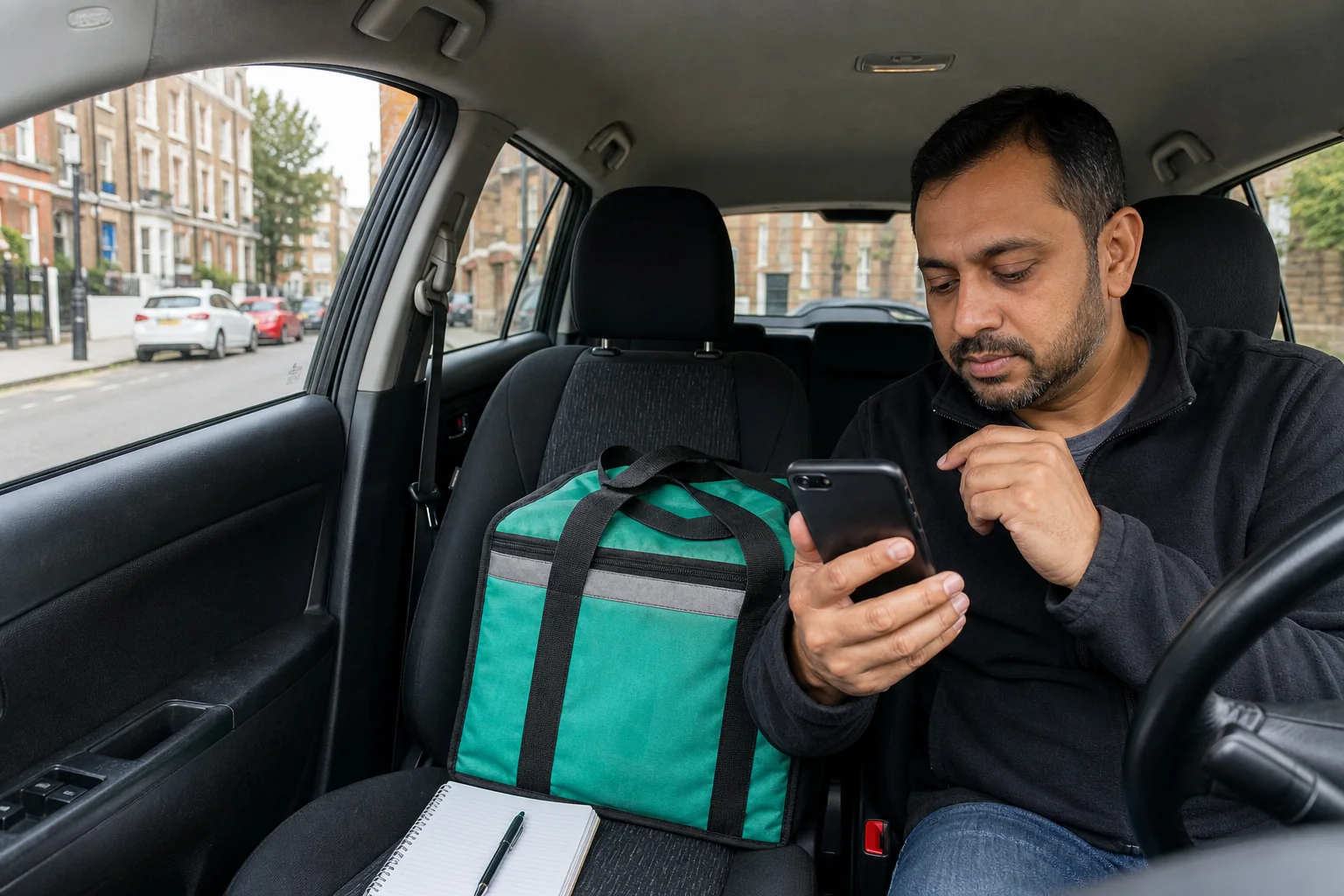
For UK gig drivers running multiple apps simultaneously, tax compliance is materially more complex than single-app driving. The OECD Digital Platform Reporting rules implemented from 2024 give HMRC automatic visibility into earnings across all platforms. Multi-apping is the norm for full-time UK drivers: typical pattern is Uber + Bolt for ride-hailing, plus Uber Eats or Deliveroo for delivery during quiet ride-hailing periods. Each platform has separate fee structures, separate VAT positions, and separate financial dynamics.
OECD Digital Platform Reporting and HMRC visibility
From 1 January 2024, gig platforms must report driver earnings to tax authorities under the OECD reporting framework:
- Platforms in scope: Uber, Bolt, FreeNow, Addison Lee, Deliveroo, Uber Eats, Just Eat, Lyft, and similar.
- Reported data: gross fees received, number of transactions, fees deducted, identifying information.
- Reporting cadence: annual, by 31 January for the prior calendar year.
- HMRC receives reports and cross-references with Self-Assessment.
- Discrepancies flagged for enquiry: drivers under-reporting one platform while reporting another fully.
OECD reporting eliminates most multi-app under-reporting
A driver who reports £30,000 of Uber but omits £8,000 of Bolt income will trigger HMRC enquiry within 6-12 months of platform reporting. The cross-reference is now automatic, not occasional.
Consolidating income from multiple platforms
Practical workflow for multi-app drivers:
- 1Maintain a single ride-hailing income ledger combining all platforms.
- 2Each platform contributes a row per week (or per day): gross fares, commission, net payout.
- 3Annual totals reconcile to each platform's tax summary.
- 4Single line on Self-Assessment: "Self-employment income, ride-hailing across multiple platforms" (gross fares total).
- 5Single expense category for platform commission (combine across all apps).
- 6Document allocation rules: expenses common to all apps (insurance, vehicle) are not platform-specific.
Food delivery mixed with passenger fares
For drivers combining ride-hailing with food delivery (Uber Eats, Deliveroo):
- Both are self-employment income, taxable in the same way.
- Same vehicle is typically used for both: no need to allocate expenses by activity type for sole traders.
- VAT: both are taxable supplies; both contribute to the £90k threshold.
- Mileage: total business miles can be combined (no need to split per platform).
- Insurance: hire-and-reward insurance covers both.
- PCO licence: covers private hire passengers; food delivery typically does not require PCO licence (different category).
Expense apportionment across operators
For most drivers, expense apportionment between platforms is unnecessary because the platforms are operationally interchangeable:
- Vehicle, fuel, insurance, mobile phone: shared resources across all platforms.
- Platform-specific costs (uniform branding, app subscriptions): allocate to specific platform.
- Mileage tracking: total business miles, not per-platform.
- TfL/council licence fees: ride-hailing-specific, not allocated to delivery.
- Equipment specific to delivery (insulated bags, cargo box): allocated to delivery only.
Separate records for courier vs private hire
For larger multi-app drivers running a more substantial operation:
- 1Some drivers maintain separate records for courier (delivery) vs private hire (passenger).
- 2Useful for: tracking which activity is more profitable, IR35-style status protection (genuine entrepreneurial activity), VAT planning.
- 3Not required by HMRC for sole traders.
- 4Required for limited company drivers operating different trades.
- 5For most sole trader drivers: a unified ledger is simpler and sufficient.
The Multi-Apping Series
We're publishing two detailed pieces per week from this series. Check back shortly.
Platform deactivation: financial implications
Drivers occasionally face deactivation by a primary platform:
- Deactivation reasons vary: ratings issues, contractual breaches, complaints, insurance lapses.
- Tax treatment: any earnings paid out in the year of deactivation remain taxable.
- Final account closing: any reserves should be paid out within 28-60 days; check tax-year timing.
- Loss of platform-paid benefits: holiday pay, pension contributions stop.
- Legal challenge: where worker status applies, deactivation may be challengeable. Compensation if successful is taxable.
- Multi-app cushion: drivers running 2+ platforms simultaneously have built-in resilience.
Sub-letting your PCO vehicle
Some drivers sub-let their PCO vehicle to other drivers when not driving themselves:
- Sub-let income: taxable as additional self-employment income.
- Distinguishable from ride-hailing income on Self-Assessment.
- VAT: contributes to £90k threshold testing.
- Insurance: hire-and-reward must cover the second driver; check policy carefully.
- TfL/council rules: in some boroughs, sub-letting requires the second driver to be separately licensed.
- Vehicle wear: depreciation/repair costs increase; tracking matters for actual-cost mileage method.
Running 2+ apps and need clean Self-Assessment?
A specialist multi-app driver accountant consolidates platforms, handles OECD-reported income, and apportions expenses defensibly.
Start with the free tracker