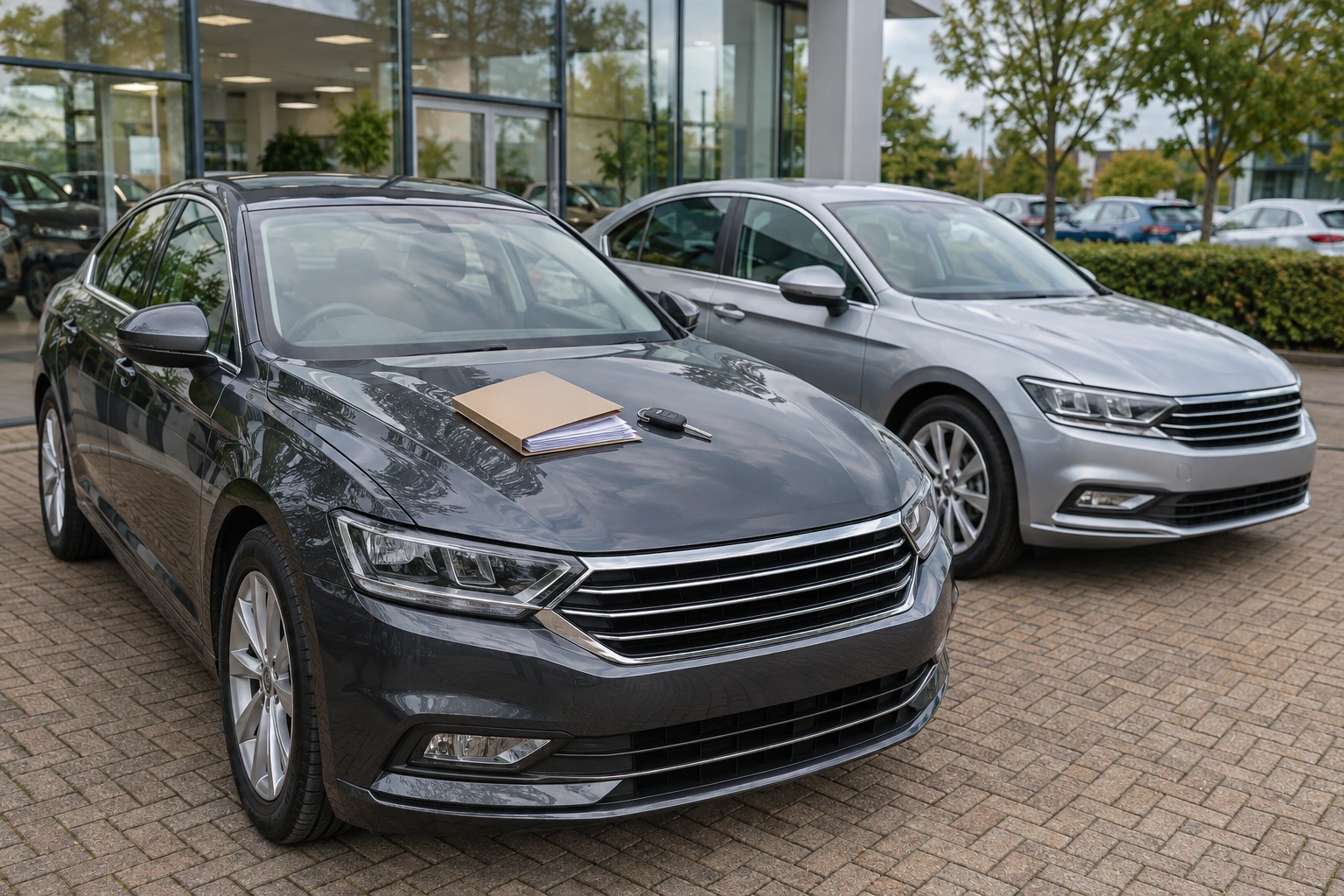
Selling, part-exchanging or scrapping a car you have used for private hire work is a tax event as well as a motoring one. What it means for your return depends on how you claimed for that car in earlier years. A driver who used simplified mileage has little to calculate, while a driver who claimed capital allowances may have a balancing charge or allowance in the year of sale.
This guide covers the records UK sole-trader drivers need when a car leaves the business and its replacement arrives. The choice between the two vehicle methods is explained in mileage or actual vehicle costs for Uber drivers.
Earlier Vehicle Claims and the Sale
Find the returns for every year you used the car and note which method each one used. HMRC’s simplified expenses manual says that once a business adopts the mileage rate for a vehicle it must apply it for as long as the vehicle remains in the business, that no capital allowances can be claimed for that vehicle, and that the mileage rate cannot be used for a vehicle on which capital allowances have ever been claimed. The two histories therefore lead to different calculations when you sell.
Simplified Mileage on the Old Car
If every year used the flat rate, no capital allowances were claimed and the car never entered a capital allowance pool, so its sale produces no balancing charge or allowance. Your job is to close the mileage log on the date of sale with a final odometer reading, so that no miles after that date are claimed for the old car.
Capital Allowances With Private Use
A sole trader’s car used partly for private journeys sits in its own single asset pool, as GOV.UK’s guide to pools explains. When you sell it, the rules on selling an asset say you deduct the sale value from that pool. Any balance left is a balancing allowance, and a sale value above the balance creates a balancing charge, which is added to your profits.
HMRC’s capital allowances manual then reduces that balancing adjustment on a just and reasonable basis to reflect private use over the whole period of ownership. That is why you need the business share for each year, not only the current one.
A 100 Percent First-Year Allowance
GOV.UK’s business cars page gives a 100 percent first-year allowance for new and unused cars with zero CO2 emissions, and the first-year allowances page says it applies to purchases made before April 2027. Because the full cost was written off, the pool usually stands at nil, so most of the sale price comes back as a balancing charge. Plan for that charge before you agree a sale price.
Worked Example With Private Use
Fictional example. A driver buys a new electric car for £36,000 and claims the 100 percent first-year allowance. Business use is 80 percent, so the allowance given is £28,800, but the full £36,000 is deducted, which leaves the single asset pool at nil.
Three years later the driver part-exchanges the car, and the dealer’s invoice shows £15,000 allowed for it. The disposal value of £15,000 exceeds the nil pool, so there is a £15,000 balancing charge. Reduced for 80 percent business use throughout, £12,000 is added to profit for the year of sale. This illustrates the method only; it does not work out tax payable for a real driver.
Sale Value, Part-Exchange and Write-Offs
GOV.UK says the value is usually what you sold the item for, that you can only deduct the original cost even if you sell for more, and that a sale for less than it was worth to someone who cannot claim allowances uses market value. Selling, swapping, an insurance payout after a loss and keeping the car for private use after stopping work all count as disposals.
With a part-exchange, the trade-in figure on the dealer’s invoice is the old car’s sale value, and the replacement’s cost is its cash price before that allowance is deducted. If finance was still owed, the settlement paid to the lender is a separate amount, and a settlement does not reduce the sale value. Keep the lender’s settlement letter with the sale documents.
Leased or Rented Cars
Returning a rented or leased car at the end of its contract is not a sale of your own asset. The tax records are the final invoices, any deposit refund and any end-of-contract charges, as set out in our guide to renting, leasing or financing an Uber car. Hire purchase is different, because HMRC’s hire purchase rules can treat you as the owner for capital allowances, so a hire purchase car follows the rules above.
VAT When You Sell the Car
For VAT-registered drivers, HMRC’s motoring VAT notice sets out three cases. If you recovered VAT on the purchase, for example under the taxi exception, you must account for VAT on the full selling price. If VAT was charged but you could not recover any of it, the sale is exempt and you cannot issue a VAT invoice. If no VAT was charged when you bought the car, you may be able to use the margin scheme and account for VAT only on any profit. The purchase position is covered in Can a Private Hire Driver Reclaim VAT on a Car?.
Vehicle Handover File
Build one file before the old car goes and keep it with the return for the year of sale.
| File section | Document | Why it matters |
|---|---|---|
| Prior claims | Returns for every year the car was used, showing the vehicle method | Decides whether any balancing adjustment applies |
| Prior claims | Capital allowance computations with the pool balance and business share each year | Gives the tax written down value and the private-use reduction |
| Prior claims | Original purchase invoice, date first used, CO2 figure and new or used status | Caps the sale value at cost and confirms the allowance claimed |
| Prior claims | VAT return and invoice if VAT was recovered on purchase | Decides the VAT treatment of the sale |
| Sale | Sale receipt or dealer part-exchange invoice, with the date | Gives the disposal value and the tax year of sale |
| Sale | Odometer reading on the day of sale | Closes the mileage log for the old car |
| Sale | Lender settlement letter | Keeps the finance settlement separate from the sale value |
| Sale | DVLA confirmation that you are no longer the keeper | Confirms the date ownership ended |
| Replacement | Purchase invoice showing cash price and any trade-in allowance | Gives the cost for capital allowances |
| Replacement | Date first used for driving work, CO2 figure and new or used status | Decides the rate and pool |
| Replacement | Note of the vehicle method chosen for the new car | Records the one point at which the method can change |
Choosing a Method for the Replacement
BIM75005 says a business can only change to or from an actual-cost basis when a vehicle is replaced. The new car is therefore your chance to choose again, and the choice will bind you for as long as you keep it. GOV.UK’s main rate for cars with CO2 emissions of 50g/km or less is now 14 percent a year, down from 18 percent before April 2026, while cars over 50g/km receive 6 percent. Compare the methods with a realistic estimate of business miles before you file the first return for the new car.
Check that the replacement is licensed and insured for private hire work before its first booking, using the questions in Uber driver insurance and vehicle costs.
Help With a Car Sale or Replacement
If you have claimed capital allowances on the old car, or you are unsure which method earlier returns used, our expense deductions review can work out the balancing adjustment and set up the records for the replacement. Tell us the purchase and sale dates and the tax years involved when you ask for a fixed quote.
Official sources checked 27 October 2026. The worked example is an illustration for UK sole-trader drivers. Limited companies, partnerships with company partners and drivers who stop trading follow separate rules.
Back to all articles