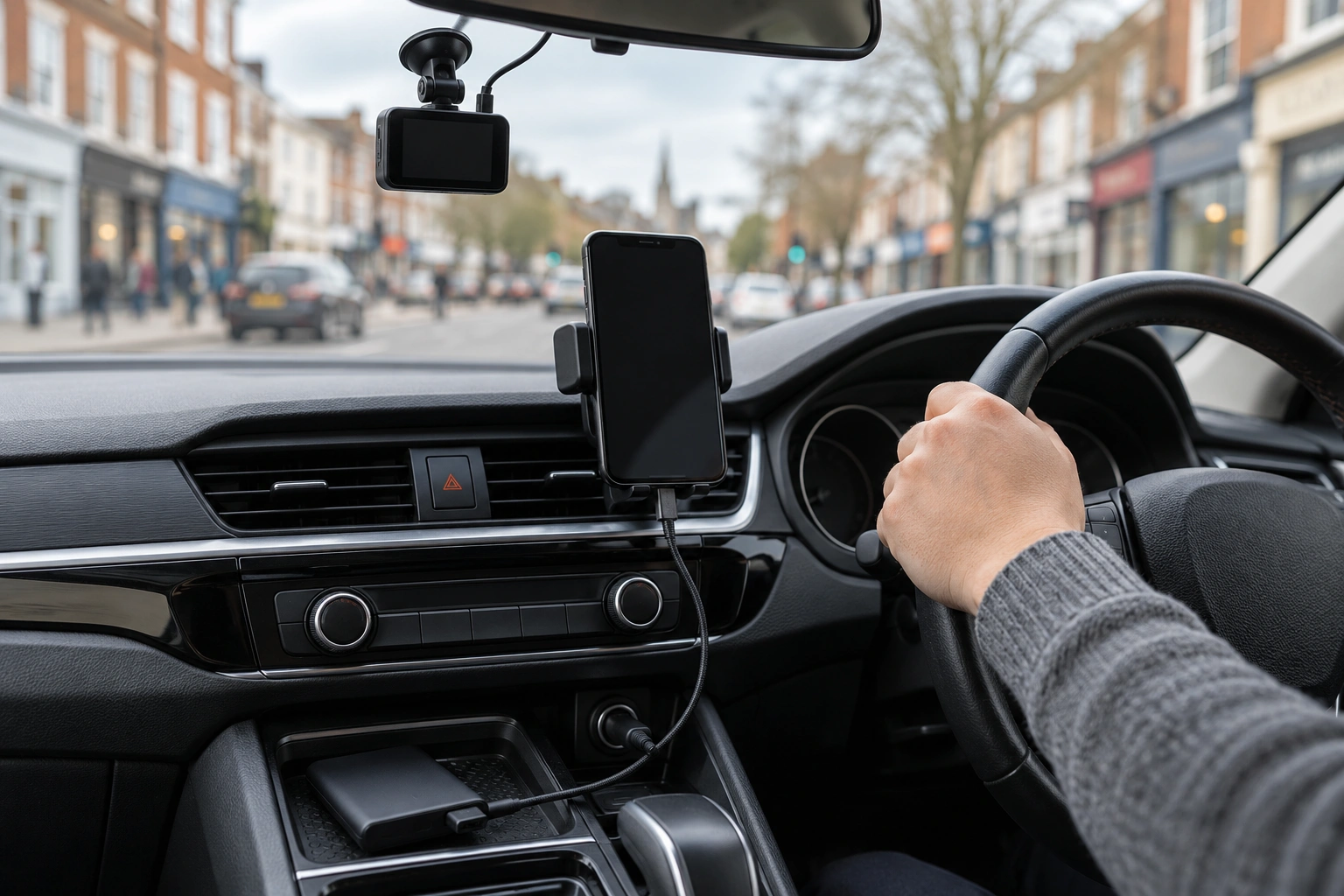
Your phone runs the driver app, the navigation and the passenger chat, and it is probably your personal phone too. That mix is why phone and data claims need more care than most driving costs. You can claim the business share of a mixed-use bill or device, but you need a reasonable way of working out that share and a record that shows how you did it.
From 6 April 2026 HMRC raised the first-band simplified mileage rate to 55p a mile, and some drivers assume the flat rate covers everything in the car. HMRC’s simplified expenses guidance says it replaces the costs of buying and running the vehicle, such as fuel, insurance and repairs, so a phone contract sits outside it. Everything below sits within the general rules on allowable expenses for Uber and private hire drivers: a cost needs a business purpose and evidence.
Phone Bills and Data With Private Use
HMRC’s guide to self-employed expenses lists phone bills as allowable office costs and says that for anything used for business and personal reasons, you can only claim the business costs. Its own example is a £200 phone bill with £130 of personal calls and £70 of business calls, where £70 is allowable.
Most driver contracts are a flat monthly price with inclusive calls and data, so there is no itemised business figure to copy. HMRC’s Business Income Manual allows an identifiable business proportion of a cost and says a detailed review of a representative period can be used to set that proportion. It also says it is sensible to keep using the proportion until the underlying circumstances change.
- Data used by apps: compare the data the driver and navigation apps used with the phone’s total, using the usage screen at the start and end of the period.
- Time on the apps: compare hours logged in to driver apps with total screen time, if the phone reports both.
- A separate phone or SIM used only for driving: the whole cost can be business, provided you can show it is not used privately.
Choose one basis, test it over at least four normal weeks, and save screenshots with the dates. A fresh check is worth doing when your work pattern changes, for example when you add a delivery app or cut your hours.
One Phone or a Separate Driving Phone
A second phone or SIM kept only for driving makes the evidence simpler, because the whole cost can be business. It only works if the phone really stays out of personal use. Once family calls, streaming or social media creep onto it, the cost is mixed again and needs a business share like any other. Weigh the extra contract against the time a usage review takes, and decide on cost rather than on the size of the deduction.
Many contracts bundle the handset into the monthly price. Under cash basis the monthly payments you make are claimed at the business share as they are paid. Under traditional accounting, ask your accountant whether part of each payment is really for the handset and belongs in capital allowances instead of running costs.
Handsets, Dashcams and Other Equipment
Equipment you keep and use in the business is treated differently depending on your accounting method. Cash basis has been the default for sole traders since 6 April 2024, and HMRC’s cash basis guidance says equipment you buy to keep is claimed as a normal allowable expense rather than a capital allowance. Under traditional accounting, the same items go through capital allowances.
Private use still reduces the claim. Under cash basis you deduct the business share of the purchase. Under traditional accounting, HMRC’s capital allowances manual says the Annual Investment Allowance for an asset used partly for other purposes is reduced on a just and reasonable basis, and the asset goes into a single asset pool.
Items fixed to the car, such as a dashcam or phone cradle, raise a further question if you use simplified mileage, because the flat rate already covers the cost of buying and running the vehicle. Ask your accountant whether a particular accessory counts as part of the car before claiming it on top of the mileage rate. A phone you trade in or sell after claiming it can also bring an amount back into the accounts, so keep the sale record.
Worked Allocation Example
The example below is fictional and its usage figures are assumptions chosen to show the method. A driver on cash basis uses actual vehicle costs for a car that is also used privately. Over a four-week review, driver and navigation apps used 36GB of the phone’s 48GB of data, a 75% business share. The car’s mileage log shows 80% business use. Each cost is matched to the basis that fits it.
| Item | Cost in 2026 to 2027 | Allocation basis | Business share | Claim |
|---|---|---|---|---|
| SIM-only contract, £18 a month | £216 | Data used by driver and navigation apps | 75% | £162 |
| Handset bought outright | £480 | Same data review as the contract | 75% | £360 |
| Dashcam | £120 | Business mileage of the car | 80% | £96 |
| Phone cradle and charging cable | £35 | Business mileage of the car | 80% | £28 |
| Power bank | £20 | Data used by driver and navigation apps | 75% | £15 |
| Total | £871 | Mixed bases, each documented | Not one rate | £661 |
Claiming the full £871 would overstate expenses by £210. The £661 claim is a deduction from profit, not a refund. For a driver whose profit falls within the basic rate band and above the Class 4 threshold, it reduces Income Tax at 20% and Class 4 National Insurance at 6%, about £171.86 in total. If the same driver used simplified mileage, the dashcam and cradle would need the accessory question answered first.
Suppose the same driver adds a delivery app in September and a second four-week review shows an 85% business share. The contract can then be claimed at 75% up to the change and 85% after it, with both reviews kept on file. If the use of a handset you have already claimed changes significantly, tell your accountant, because equipment claims can need adjusting when use changes.
Records That Support the Claim
- The phone contract and each monthly bill, or the card payments for a SIM-only plan.
- The receipt for any handset or accessory, showing the date, supplier and price.
- Dated screenshots of the usage review, with a one-line note of the basis and the percentage it produced.
- The mileage log figure used for items fixed to the car.
- A note of any change in use during the year and the date it happened.
- Any trade-in or sale record for equipment you have replaced.
File the bill each month alongside the weekly record routine so the year-end figure is not rebuilt from memory. Drivers already using Making Tax Digital enter the same business share in their software, using one of HMRC’s three approaches to mixed-use costs, as part of their MTD digital records. At the year end, the percentage and its evidence travel with the rest of the Self Assessment documents your accountant needs.
When the Trading Allowance Applies Instead
HMRC’s expenses guide says you cannot claim expenses if you use the £1,000 trading allowance. A part-time driver or courier with low takings may find the allowance gives a larger deduction than a share of a phone bill, but the two cannot be combined for the same trading income. Compare both before the return is filed.
Help Checking Your Equipment Claims
If you are unsure which basis suits your phone, or whether an accessory belongs with the car, our expense deductions service can review your usage evidence, receipts and vehicle method within an agreed scope. Send the contract type, the equipment you bought and your accounting method when you ask for a fixed quote.
Official sources checked 22 October 2026. The allocation example is an illustration for UK sole-trader drivers using cash basis. VAT-registered drivers and limited companies follow separate rules for the same costs.
Back to all articles