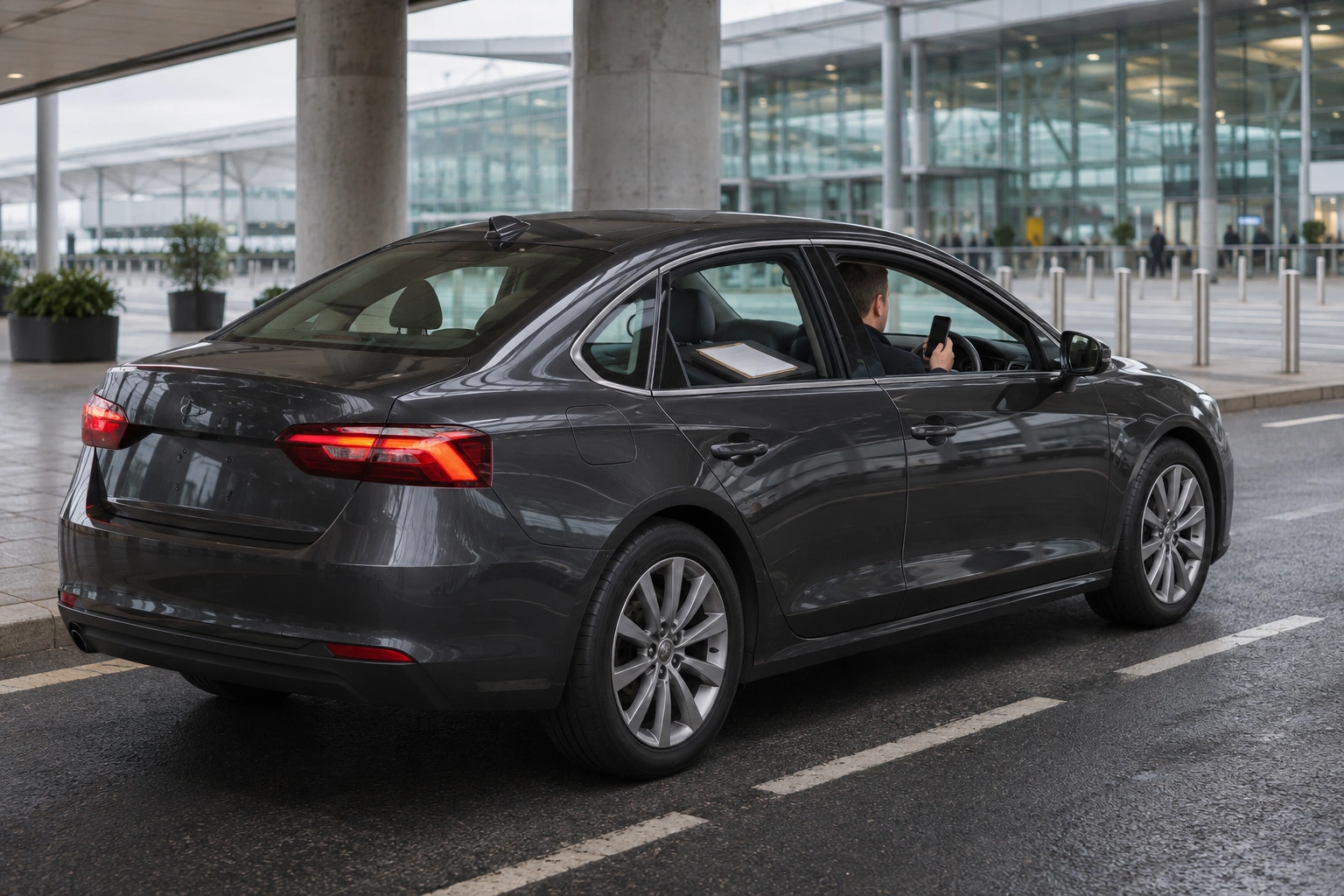
Airport drop-off fees, the London Congestion Charge, ULEZ payments, crossing tolls and car park tickets recur in almost every busy week. Each can be an allowable cost when you pay it for a business journey, but your record has to show the charge, the trip it relates to and whether a passenger or operator has already paid you back. Fines and penalty charges stay out of the claim altogether.
This guide covers charge records for UK sole-trader drivers who file Self Assessment. Vehicle methods, phone costs and the other categories are covered in allowable expenses for Uber and private hire drivers.
Charges You Can Claim Under Either Vehicle Method
HMRC’s travel expenses guidance lists parking among the vehicle costs a self-employed person can claim, and excludes non-business driving, fines and penalty charges. Its simplified expenses page says you can claim parking on top of the flat mileage rate, which for a car is 55p a mile for the first 10,000 business miles from 6 April 2026.
HMRC’s Business Income Manual is more specific. BIM75005 says the mileage rate does not include incidental costs of a particular journey, naming tolls, congestion charges and parking fees, and that these are allowable where they are incurred solely for business purposes. Fuel, insurance and repairs are a different matter: the flat rate already covers them, as our guide to Uber driver insurance and vehicle costs explains.
So the charge records matter whichever method you use. What decides the claim is the journey. The test for what counts as a business mile also tells you whether a charge paid on that trip is a business cost.
Airport Drop-Off and Waiting Charges
Heathrow’s Terminal Drop-Off Charge page says all taxis and private hire vehicles must pay £7 each time they enter a terminal drop-off zone, with payment due by midnight the next day. Non-payment leads to an £80 Parking Charge, reduced to £40 if paid within 14 days. Taxi-Point reported that the £7 rate and a 10-minute maximum stay took effect on 1 January 2026.
Heathrow recommends a free business account for private hire drivers. The account supports autopay and shows every drop-off in its trip history, which makes a better record than a run of card payments because it gives the date, time and vehicle for each entry.
Gatwick’s drop-off page sets a minimum £10 charge for 10 minutes in the North and South Terminal zones, then £1 for each extra minute up to 20 minutes, with a 30-minute maximum stay and payment due by midnight the following day. Waiting in a short-stay car park for a pre-booked pickup is a parking cost of that job, so keep the car park receipt with the booking reference.
London Congestion Charge and ULEZ
The Mayor’s decision MD3442, signed on 11 November 2025, raised the daily Congestion Charge from £15 to £18 from 2 January 2026, with the pay-later price rising to £21. The old Cleaner Vehicle Discount ended on 25 December 2025. Its replacement gives electric cars 25 percent off only when they are registered for Auto Pay or Fleet Auto Pay, and the discount falls to 12.5 percent from 4 March 2030.
The charge is daily, so one payment can cover several jobs and some private driving on the same day. If the only reason you entered the zone that day was private, the charge is private. Where a day mixes both, write down why you were in the zone and ask your accountant before claiming it. The same applies to the £12.50 daily ULEZ charge for vehicles that do not meet the emission standards, which Heathrow’s ULEZ page notes is separate from the airport’s own fees.
Bridge, Tunnel and Crossing Tolls
Tolls follow the same rule. The Dart Charge for the Dartford Crossing must be paid by midnight the day after you cross, and a Dart Charge account keeps a history of each crossing. Save that history, or the receipt for a one-off payment, and match each crossing to the trip that needed it. A crossing on the way to collect a passenger belongs to that job; one on a private weekend trip does not.
Reimbursed Charges and Double Counting
A charge is sometimes paid back to you. A passenger may cover an airport fee in the fare, or an operator may show a toll or fee as its own line on a trip statement. Check how each of your statements shows these amounts, because platforms and operators do not all present them the same way.
There are two consistent treatments. Either include the reimbursement in your income and claim the charge as an expense, or leave both out. Both give the same profit. The errors come from mixing them. Leaving a reimbursed £7 out of income while also claiming it understates profit by £7, and entering the same Auto Pay charge from both the bank feed and the account statement claims it twice. A weekly record routine catches most of these if you tick each charge against a single source document.
Sample Trip-Cost Record
The rows below are fictional and show the method only. The Heathrow and Congestion Charge amounts are the published rates checked for this article; the car park amount is invented.
| Trip | Charge and receipt | Reimbursement shown | Income entry | Expense treatment |
|---|---|---|---|---|
| Heathrow Terminal 5 drop-off for a passenger | £7, Heathrow business account history | £7 airport fee line on the trip statement | Fare including the £7 | Claim £7 once, from the account history |
| Weekday of central London jobs | £18 Congestion Charge, Auto Pay statement | None | No adjustment | Claim £18; the zone was entered only for work |
| Sunday family visit inside the zone | £18 Congestion Charge, Auto Pay statement | None | No adjustment | Private, not claimed |
| Wait for a pre-booked airport pickup | £9.50 car park receipt | None | Fare as shown | Claim £9.50 with the booking reference |
| Heathrow drop-off not paid by the deadline | £40 reduced Parking Charge | None | No adjustment | Penalty, kept out of the claim |
In the first row the £7 appears as income and as an expense, so profit does not change, which is the right result for a cost the passenger has paid for. The penalty row stays in your records so that the payment is explained, but it never reaches the expense total.
Charges Versus Penalties
HMRC’s manual entry on fines says a fine incurred by breaking the law is not allowable, because it is not incurred wholly and exclusively for the trade. The GOV.UK travel page also excludes fines and penalty charges. Keep parking tickets, Penalty Charge Notices, airport Parking Charges and bus lane fines on a separate list. Paying the Congestion Charge at the later £21 rate is still paying the charge, whereas a Penalty Charge Notice for not paying it at all is a penalty.
Charge Record Checklist
- Open an account where one exists. A Heathrow business account, Congestion Charge Auto Pay and a Dart Charge account each keep a dated history.
- Download each account history monthly, or for each quarter if you send Making Tax Digital updates, and file it with the platform statements for the same period.
- For each charge, note the date, vehicle registration, location and the trip or booking reference it relates to.
- Mark any day where a daily charge also covered private driving, with the reason you entered the zone.
- Tick each charge against one source only, so that a card payment and an account statement are not both entered.
- Check each trip statement for airport fee or toll lines and note which treatment you use for reimbursed charges.
- Keep penalties, Parking Charges and fines on a separate list that never feeds the expense total.
- If an account history or receipt is missing, request a copy and log the gap in a missing-records recovery log rather than estimating the amount.
Help Reviewing Your Charge Records
If your charges run across several accounts, or a statement shows fees you cannot match to a trip, our expense deductions review can check the records and the treatment of reimbursed amounts before they reach your return. Tell us the tax year and which charge accounts you use when you ask for a fixed quote.
Official sources checked 27 October 2026. The trip-cost record is an illustration for UK sole-trader drivers. VAT-registered drivers and limited companies follow separate rules for the same charges.
Back to all articles